


fire pump

Fire Pump
In fire safety systems, failure is rarely caused by the fire itself—it is caused by insufficient water pressure at the critical moment. When every second matters, the entire protection network depends on one core element: a reliable fire pump.
The Fire Pump category at Derafire represents the backbone of active fire protection systems, providing the hydraulic force required to keep sprinklers, hydrants, and suppression networks fully operational during emergency conditions. These systems are engineered to ensure continuous pressure stability and dependable performance when it is needed most.
Product Introduction
A fire pump is a mechanical device designed to supply and maintain adequate water pressure within a fire protection system. It ensures that water is delivered with sufficient force to reach all required areas of a building during a fire emergency.
These systems are a critical part of active fire protection infrastructure, supporting the operation of sprinklers, hydrants, and other suppression components. Without a properly functioning fire pump, even a well-designed fire protection system cannot perform effectively under emergency conditions.
Fire pumps are typically used in buildings and facilities where the normal water supply pressure is not sufficient to meet fire safety requirements.
Specifications & Types
Fire pumps are engineered to ensure a continuous and reliable water supply within fire protection systems, especially in situations where pressure stability becomes critical. They are designed to activate and operate under emergency conditions, supporting the full network of sprinklers, hydrants, and suppression lines.
In modern fire protection design, fire pumping solutions are not limited to a single standalone device—they are often part of a complete pumping setup that ensures system readiness at all times, even under demanding operational conditions.
Types of Fire Pumps
The Fire Pump category at Derafire includes the following main configurations:
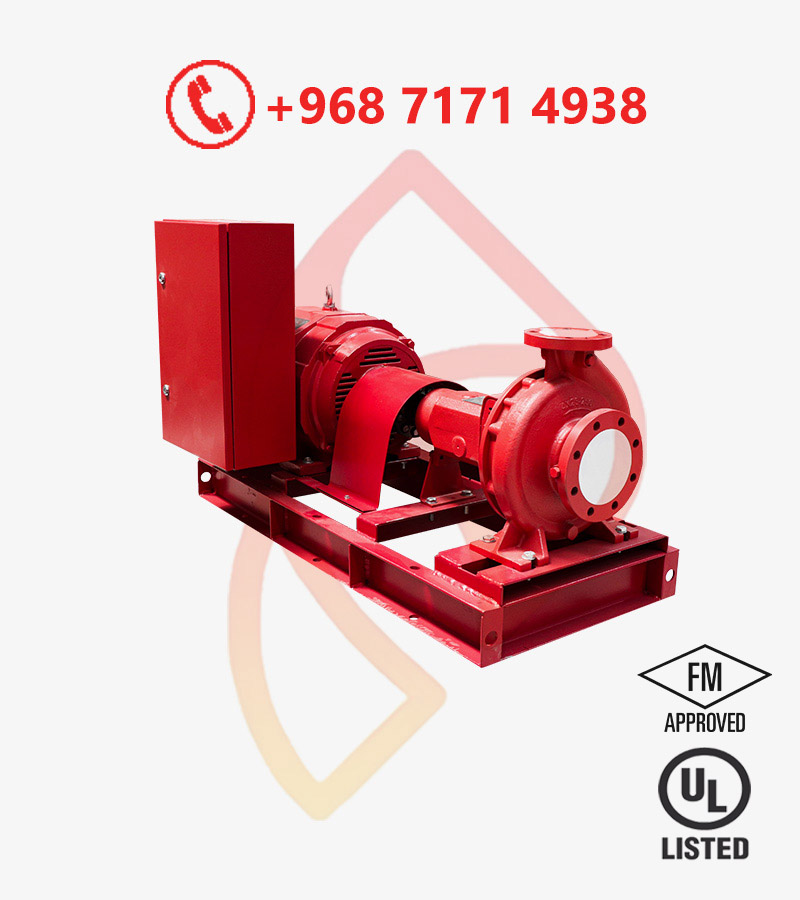
Electric Fire Pump
A primary pumping solution powered by electricity, commonly used in buildings where a stable and uninterrupted power supply is available. It provides consistent performance and is typically integrated into fully automated fire protection systems.
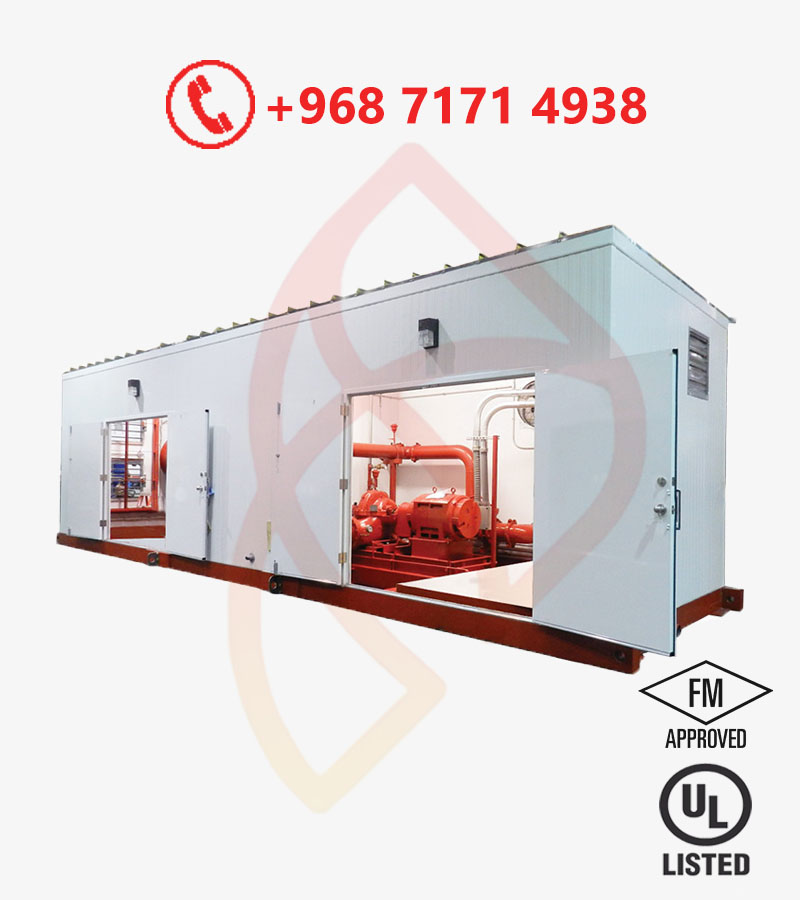
Fire Pump House
A complete packaged system that includes fire pumps along with supporting equipment such as controllers, valves, and piping infrastructure. It is designed as a centralized pumping station to ensure reliable system operation and simplified installation.
Each configuration available in Derafire is selected to meet specific fire protection requirements based on system design, site conditions, and operational needs. Proper selection ensures stable water supply performance and full compliance with fire safety standards during emergency situations.
Buying Fire Pumps
A fire pump is not selected at the point of purchase—it is defined at the stage where the reliability of the entire fire protection system is engineered. In emergency conditions, this single component determines whether water reaches every part of the system with the required pressure and stability.
Because of this, fire pump selection is not a product comparison task—it is a system-level engineering decision. Every project has its own hydraulic conditions, risk profile, and operational requirements that directly influence the final configuration.
What Defines the Right Selection
Instead of focusing only on equipment specifications, fire pump selection should be based on how the system is expected to perform under real fire scenarios:
• Hydraulic demand under peak emergency conditions
• Stability of water supply across the entire system
• Required redundancy for critical infrastructure
• Compatibility with sprinkler and hydrant networks
• Power availability during emergency operation
• Compliance with fire safety engineering standards
Why Incorrect Selection Creates System Risk
A mismatch in buying fire pump can affect the entire fire protection chain. Insufficient pressure or unstable flow does not just reduce efficiency—it can compromise the system’s ability to respond effectively during critical moments.
For this reason, pump selection is treated as a core engineering responsibility rather than a simple procurement step.
Engineering Support and Project Approach
In professional fire protection design, selection is often supported by technical evaluation to ensure full alignment between system requirements and pump performance. This approach helps reduce design risk and improves overall system reliability.
Suppliers such as Derafire typically operate within this project-based engineering framework, where fire pump solutions are selected and supplied according to detailed system specifications rather than standard catalog choices.
Price Fire Pumps
When it comes to fire pumps, price is never just a number—it is a reflection of system reliability, engineering accuracy, and the level of protection a building is designed to achieve in critical moments. In fire safety projects, what truly matters is not how much a pump costs, but how confidently it performs when everything depends on it.
Fire pump pricing is influenced by multiple technical and project-specific factors rather than a fixed catalogue value. Each system is uniquely designed, which means the final cost is always shaped by real engineering requirements.
What Influences the Final Cost
Several key factors determine the pricing of fire pump systems:
• Required flow rate and pressure capacity
• Type of fire pump configuration (electric or packaged system)
• System design complexity and building scale
• Redundancy and backup requirements
• Integration with fire protection networks
• Compliance with project specifications and standards
Because of these variables, every fire pump project follows a customized pricing structure tailored to its technical scope.
Why Fire Pump Pricing Is Project-Based
Unlike standard industrial equipment, fire pumps are not selected for general use—they are engineered for specific fire scenarios. This is why pricing must always reflect system design, not just product type.
A properly designed system may reduce long-term operational risk, improve performance stability, and ensure compliance with fire safety requirements, making it a value-driven investment rather than a simple purchase.
Request Your Project Quotation
To ensure accurate pricing, fire pump selection must always be aligned with detailed project specifications. Once technical requirements are defined, a precise and tailored quotation can be prepared based on system design and performance needs.
Contact Derafire today to receive a project-based quotation and expert consultation for your fire pump system.
Subscribe and receive news about Sield Company
It will be used in accordance with our privacy policy.
 Importation